What is Habit Stacking in Fitness? Unpacking the Science Behind Good Habit Formation
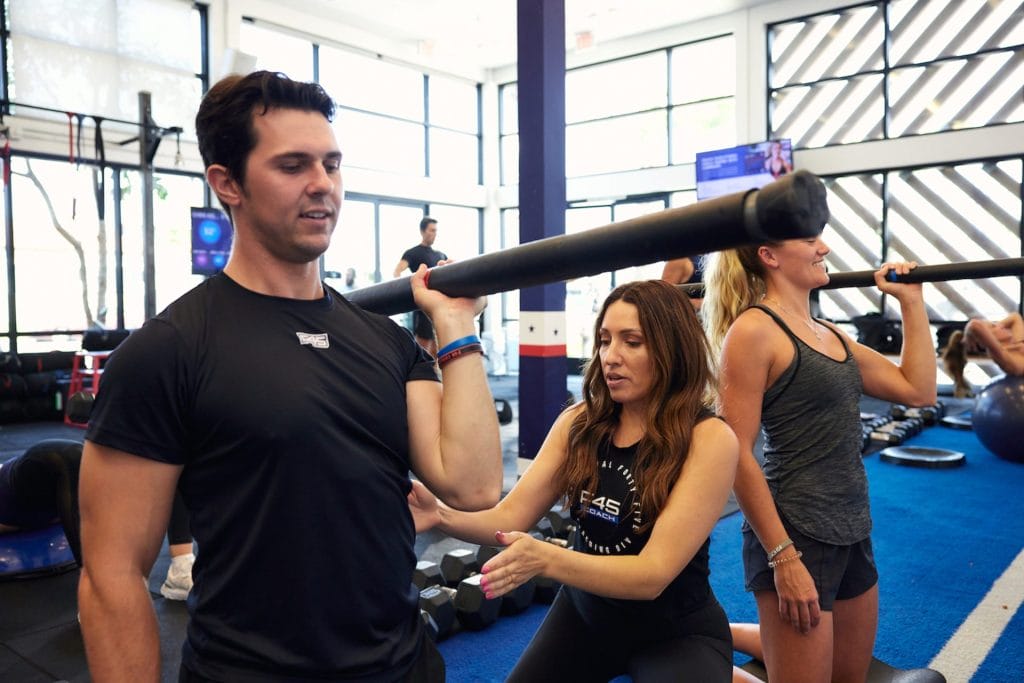
Starting a new fitness routine is one thing – sticking to it is another!
Becoming consistent with your F45 workouts isn’t really about motivation; it’s about reaching the point where turning up stops feeling like a decision and simply becomes something you do. In other words, taking desirable behaviors – and turning them into habits.
So, how long does it take to form a good habit?
It comes down to how long it takes your brain to shift a behavior from a conscious decision into something it runs on autopilot. Repeat an action in the same context enough times, and it starts to feel like second nature.
Habit stacking makes reaching that point easier. Instead of relying on willpower, it attaches a new habit to something you already do automatically, using that as the trigger.
Want to know more? Read on as we explain what habit stacking is, why it works, and how to use it to build good fitness habits that last.
What is habit stacking?
Habit stacking is a technique for building a new habit by attaching it to one you already do automatically1.
Chances are you’re already practicing habit stacking without realizing it. Think about your mornings: your alarm goes off, you turn it off, you get up, you make the bed, you head to the kitchen and put the kettle on. You don’t decide to do these things in order – one simply triggers the next, like dominoes falling. That chain runs itself because you’ve done it so many times the sequence has become automatic.
Habit stacking borrows that momentum. You take a habit you already do every single day and stack the new one directly on top, using a simple formula:
- After [current habit]
- I will [new habit]
For example: After I pour my morning coffee, I’ll go for a walk around the block.
Why does habit stacking work?
Habit stacking works because it connects a new behavior to a routine your brain already recognizes1.
Your brain is a high-maintenance organ, using around 20% of your body’s total energy2, which is why different types of rest are so important. To conserve that energy, your brain looks for ways to avoid making the same decisions again and again. When you repeat a behavior often enough, your brain gradually stops treating it as a conscious choice and begins running it automatically. That is how a habit forms1.
This helps explain why getting motivated to exercise can feel so difficult. Motivation takes effort and changes from day to day, so every workout can become a decision you have time to talk yourself out of. When you habit stack exercise onto an existing routine, however, you remove some of that decision-making. The familiar cue prompts you to get started, giving hesitation less time to get in the way.
How do good habits form?
Habits develop through a psychological process known as the habit loop3. It begins with a cue that prompts you to act, followed by the behavior itself, and a reward that encourages your brain to repeat it3. Good fitness habits are more likely to form when each part of this loop is clear and easy to follow.
Say you want to start attending an F45 class after work:
- Cue: You finish work.
- Behavior: You head to the studio and complete the class.
- Reward: You leave feeling energized and accomplished, while feel-good chemicals such as endorphins and dopamine help your brain recognize the experience as an action worth repeating.
Each time you complete the loop, it grows a little stronger. Your brain starts to link the cue with the reward that’s coming, so finishing work begins to pull you towards the studio automatically – until the whole sequence feels less like a decision and more like something you just do.
The easier the studio is to reach, the harder it is to talk yourself out of going – so use our studio finder to find your closest F45, and start a trial to get your habit loop going!
Habit stacking examples for fitness
Habit stacking works best when the anchor is already deeply rooted in your routine, so the new action has something solid to attach to. Below are a few habit stacking examples you can use to build more movement and wellness into your routine.
Morning movement
Mornings tend to follow the same sequence every day, which makes them ideal for habit stacking. Attaching movement to a step you already take can make it feel like part of getting ready rather than an extra task, for instance:
- After I turn off my alarm, I will get out of bed and stretch.
- After I pour my coffee, I will step outside for some fresh air.
- After I finish breakfast, I will take a ten-minute walk.
Building an exercise routine
Anchoring exercise to a fixed point in your day gives your brain a clear cue to start before hesitation creeps in. Whether you work out in the morning or at night, be sure to tie the session to something already locked into your routine.
Some habit stacking examples include:
- After I finish dinner, I will lay out my training gear for tomorrow.
- After I wrap up my Saturday errands, I will head straight to a weekend F45 class.
- After I brush my teeth in the morning, I will change into my training gear.
Supporting recovery habits
Rest and recovery are important to your results and can help you manage delayed-onset muscle soreness (DOMS), yet they’re often the first thing we skip. Habit stacking gives recovery a fixed place in your routine, so it’s far less likely to fall away. For example:
- After I finish my workout, I will set a timer and stretch for five minutes.
- After I finish a station in my F45 workout, I will take a sip from my water bottle.
- After I get into bed, I will do five rounds of box breathing to wind down.
Our recovery workouts offer a form of active recovery built around mobility and flexibility. Gentle movement keeps blood flowing to tired muscles and helps you move more freely into your next workout.
Nutrition habits
Nutrition habit stacks work best when they attach to something food-related you already do, like a meal, a grocery shop, or your weekly meal prep. Keep the new action small enough that it doesn’t make the existing routine feel like more effort, such as:
- After I finish a meal, I will drink a full glass of water.
- After I unpack the groceries, I will prep a few meals for the week.
- After a sugar craving hits, I will reach for a piece of fruit first.
How long does it take to form a good habit?
There is no one-size-fits-all answer. Depending on the person and the complexity of the behavior, a habit can take anywhere from a few weeks to almost a year to form.
The common belief that habits take 21 days to develop is a debunked myth. The figure came from observations about how long patients took to adjust after surgery, not research into behavior change!
Instead of counting the days, focus on repeating the behavior consistently in a familiar setting. The F45 Training app makes this easier by allowing you to view class schedules, book sessions, and join waitlists in advance. Giving each workout a regular place in your week can help exercise gradually feel like a natural part of your routine.
3 common mistakes when building new fitness habits
Studies into good habits and how to form them have found that people tend to trip over the same few hurdles – and the good news is they’re easily avoidable once you know what to watch for. Read on for three mistakes to avoid when habit stacking.
1. The all-or-nothing mindset
The all-or-nothing mindset tells you that one slip ruins everything.
Miss a Monday workout, and you might as well write off the week. Have one slice of cake, and you may as well finish the whole thing.
As F45 athlete Noah Galloway puts it: “Don’t let a missed session convince you the work is gone. Your progress lives in everything you’ve already done – one day off can’t erase weeks of showing up. What matters is that you come back, not that you never left.”
Try this habit stack: when you cancel a class, book another before you close the app. It closes the gap straight away, so you’ve got a fixed point to return to instead of an open-ended hole that’s easy to keep putting off.
2. Starting too big
The second trap is overshooting. When motivation is high, it’s tempting to go all in – but the bigger the habit, the harder it is to hold onto once that initial buzz fades. Start with something so small and realistic you could do it on your worst day. If you’re not a morning person, don’t lock in a 6am class – because a habit you dread is a habit you’ll drop.
3. Anchoring to a weak habit
Habit stacking only works when the habit you build on is already firmly established. Your anchor should be something you do automatically every day, without needing a reminder.
Make a list of the actions that are already part of your routine, such as having your morning coffee, starting your commute, or closing your laptop at the end of the day. This will help you identify your strongest anchors and find a natural place for your new habit.
How F45 helps turn workouts into lasting habits
F45 workouts make it easy to show up and build good fitness habits by:
- Setting class times that slot into your week the same way each time, so training becomes a fixed, sustainable part of your fitness routine rather than a daily decision.
- Booking in advance, which locks the commitment in before hesitation sets in.
- Building in a community through group classes, so there’s a team keeping you turning up on the days motivation runs low.
- Programming every workout, so there’s nothing to plan – you just show up and move.
The F45 Challenge takes all of that and gives it a runway. It’s a 45-day program that pairs the classes with meal plans, recovery sessions, and app-based progress tracking. With your coaches checking in and a team taking it on alongside you, accountability is built into the 45 days rather than something you have to summon on your own. By the time it wraps, the good fitness habits are already there!
Now that you know how to build good habits, discover more about how exercise benefits your brain – and why working out with a community boosts happiness.
1 https://pmc.ncbi.nlm.nih.gov/articles/PMC11641623/
2 https://www.ncbi.nlm.nih.gov/books/NBK20367/
3 https://pmc.ncbi.nlm.nih.gov/articles/PMC3505409/
Written and published by F45 Training HQ, and reposted here for the F45 Morris Plains community.
Keep reading

What is the Nervous System, and How Does it Play a Crucial Role in Your Workouts?
Every squat, sprint, lift, and burpee starts long before your muscles move – it begins with your nervous system, firing signals milliseconds ahead of any consci
Read the article →
What is Muscle Memory? The Brain-Body Link Behind Why Workouts Get Easier
You’ve probably heard of muscle memory – the term describing the way a movement can come flooding back, even after years without practice. But how does muscle m
Read the article →Fueling the Athlete Track
FUELING THE ATHLETE TRACK You already know training hard means pushing when it counts and holding back when it doesn’t. Nutrition works the same way; it’s what
Read the article →